
As individuals age, cholesterol, fats, and other substances can form plaques on artery walls. These plaques can narrow arteries or even block them completely. Unstable plaques may suddenly rupture, leading to blood clots, a common cause of stroke.
Early Detection: Screening helps identify early carotid artery stenosis or plaque formation.
Risk Assessment: Evaluates stroke risk based on the number, size, and characteristics of the plaques.
Treatment Decisions: Provides personalized treatment recommendations, such as medication, lifestyle changes, or surgery.
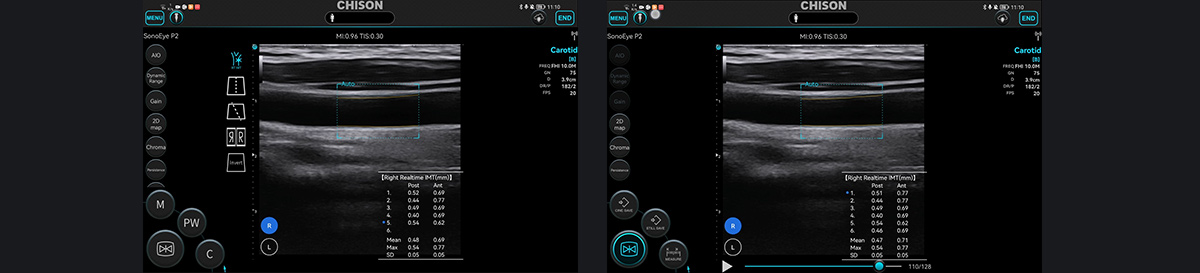
AutoIMT
1. Vascular Diameter Measurement: Measure the inner diameter during the systolic phase of the heart, at the mid-point of the common carotid artery, 1 cm from the bulb of the internal carotid artery, and 1 cm from the bulb of the external carotid artery, from the inner surface of the intima to the opposite inner surface.
2. IMT Measurement: The majority of domestic protocols use a single-point method, positioning the measurement at the distal wall of the common carotid artery 10-15 mm from the carotid bulb. Some studies use a multi-point method, selecting the far wall at 10-15 mm from the carotid bulb, the bulb itself, and 1 cm above the initial part of the internal carotid artery. Measure the vertical distance from the inner surface of the intima to the boundary between the media and the adventitia. Normal values are <1.0 mm for the common and internal carotid arteries and <1.2 mm for the common carotid bulb.
Ultrasound measurement of carotid IMT is crucial for assessing the severity of atherosclerotic changes in the carotid artery.
Normal IMT: <1.0 mm
Thickened IMT: 1.0-1.5 mm
Carotid Plaque Formation: >1.5 mm
Studies show that each 0.1 mm increase in IMT corresponds to a 10-15% increase in myocardial infarction risk and a 13-18% increase in stroke risk.
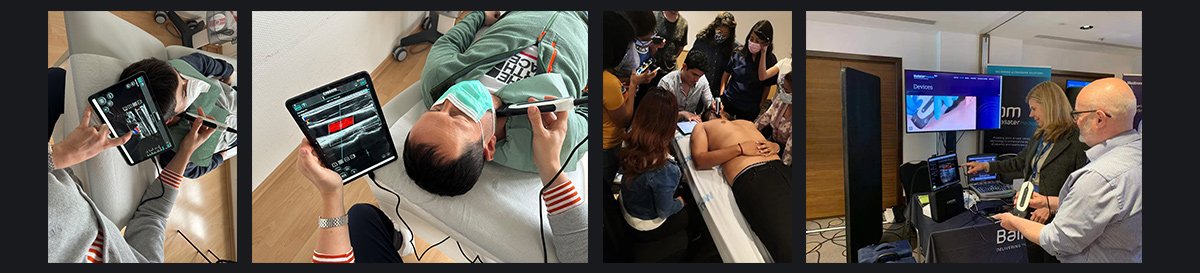
Customer Feedback
Elderly Health Assessment: Regular checks for carotid plaques can help evaluate cardiovascular health and stroke risk in the elderly.
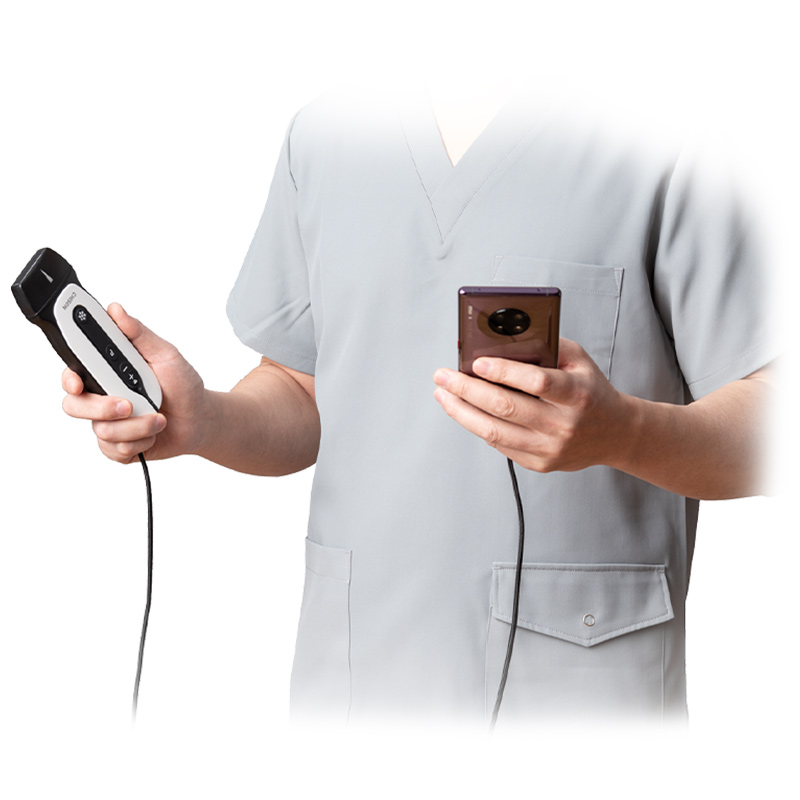
Community Health Events: SonoEye can be used for quick and convenient screening during community health activities or other public health events.
Public Health Screenings: In areas with high cardiovascular disease risk due to smoking, unhealthy diets, or genetic factors, regular carotid plaque screenings can be organized by public health departments.
Healthcare in Rural and Remote Areas: In resource-limited or hard-to-reach areas, SonoEye provides preliminary medical assessments for local residents.
Regular Screening for Specific Groups: Individuals with a history of cardiovascular disease, obesity, multiple chronic conditions, or those on medications increasing vascular risk can benefit from regular screenings.
Carotid screening is a powerful tool for preventing cardiovascular diseases, especially strokes. Regular examinations help doctors identify patients at high risk of cerebrovascular disease early, enabling personalized treatment plans that are more targeted and effective. By screening high-risk patients, potential life-threatening issues can be detected and addressed promptly, improving survival rates and overall societal well-being.
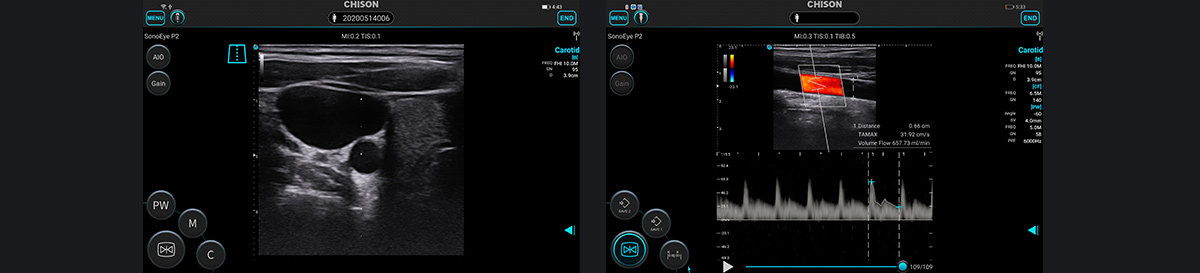
SonoEye Demo Images in Vascular
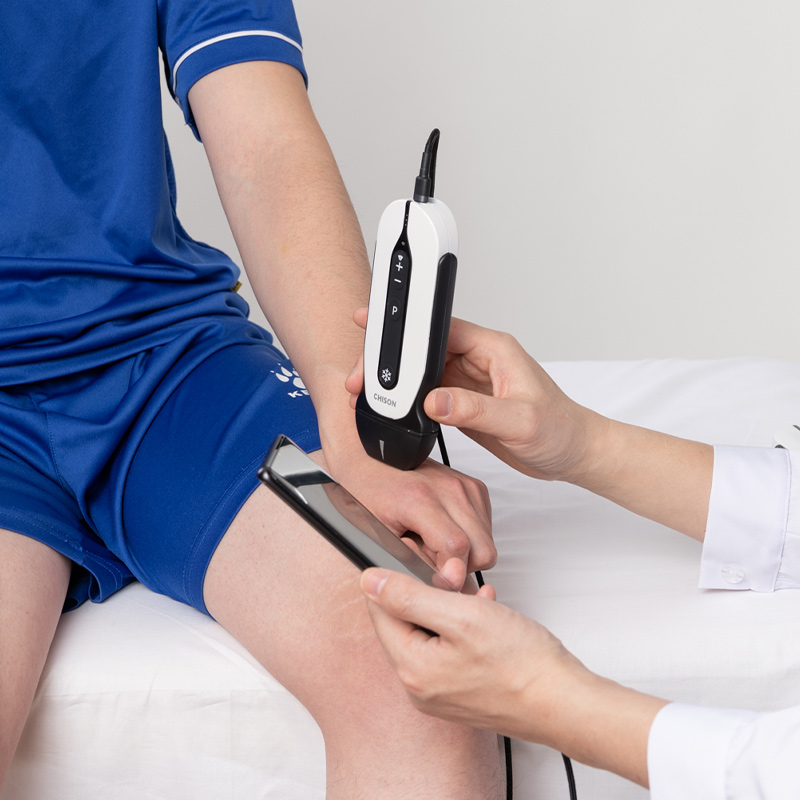
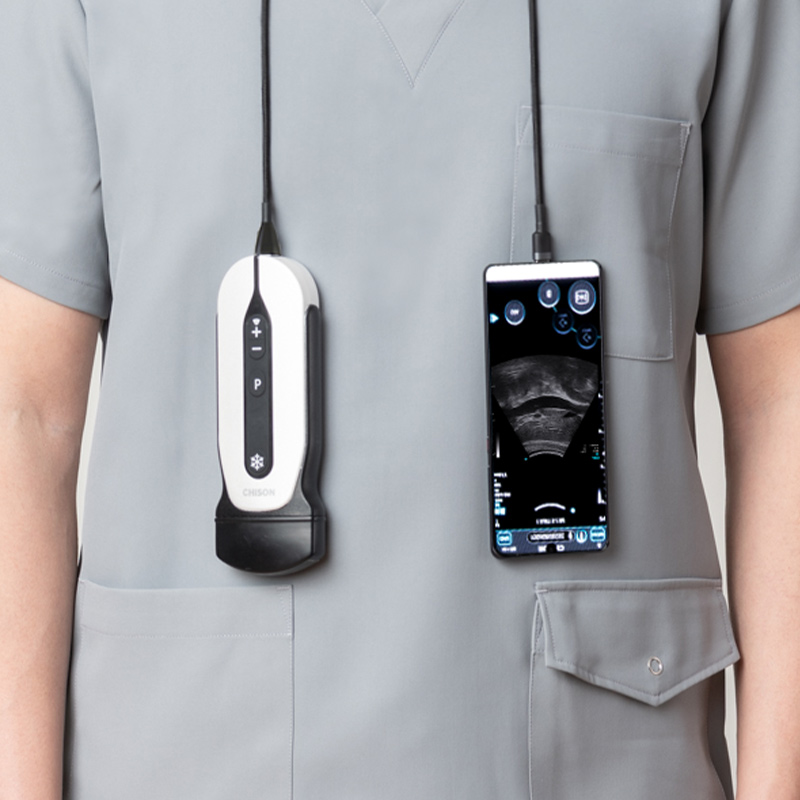
SonoEye provides quick, non-invasive, and radiation-free carotid plaque screening. Its high portability makes it especially suitable for bedside, field, or resource-limited environments. As a result, its clinical applications are increasingly widespread. Whether for elderly health assessments, community health events, public health screenings, or medical services in rural and remote areas, SonoEye is a reliable tool for comprehensive vascular health evaluation.
Learn more about the SonoEye handheld ultrasound by following CHISON SonoEye on major social media platforms. For pricing information, contact sonoeye@chison.com.cn.