
Point-of-Care Ultrasound (POCUS) represents a significant advancement in modern medical diagnostics, providing healthcare professionals with a powerful tool for real-time, bedside imaging. This technology enables clinicians to make immediate, informed decisions in a wide range of clinical settings, from emergency departments to rural clinics. The impact of POCUS on patient care cannot be overstated, as it enhances diagnostic accuracy, expedites treatment, and improves overall patient outcomes.
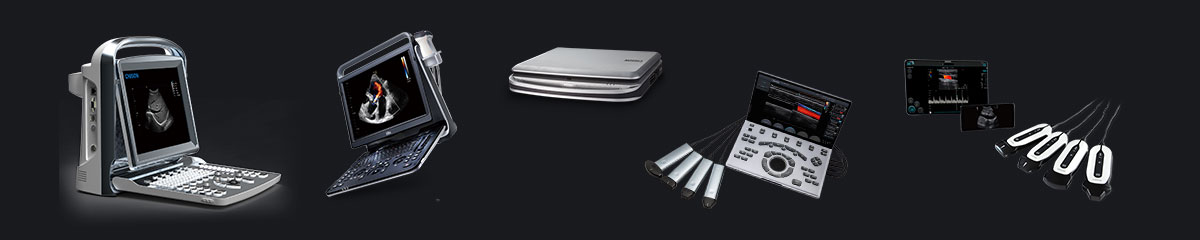
The journey of ultrasound technology began in the early 20th century, with the advent of sonar technology used during World War I. This technology was adapted for medical purposes in the 1940s and 1950s, leading to the development of the first medical ultrasound devices. These early machines were large, cumbersome, and primarily used in specialized imaging departments.
Over the decades, ultrasound technology evolved significantly, becoming more compact and versatile. By the 1980s, portable ultrasound machines had become more common, allowing for greater mobility within hospitals. These traditional portable ultrasound devices were a breakthrough at the time, providing high-quality imaging that could be transported from one department to another. However, they still required significant space and were not truly portable in the sense of being used anywhere, anytime.
The transition to handheld ultrasound devices marked a revolutionary leap in the field. Unlike traditional portable ultrasound machines, handheld devices are compact enough to fit in a pocket, making them ideal for point-of-care use. This transition was driven by advancements in miniaturization, battery technology, and imaging software, which collectively made it possible to create devices that deliver high-quality images in a truly portable format.
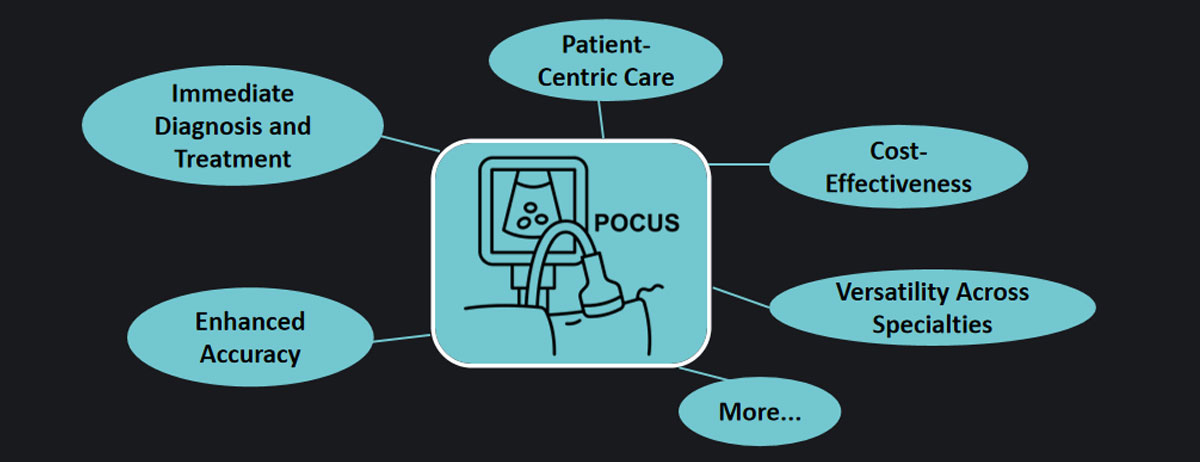
The advantages of POCUS in modern medicine are manifold, transforming the way healthcare is delivered across various specialties. The ability to perform ultrasound imaging at the patient's bedside has numerous benefits, including:
POCUS allows clinicians to perform real-time imaging and make immediate clinical decisions. This is particularly crucial in emergency medicine, where time is of the essence. For instance, in cases of trauma, POCUS can be used to quickly assess internal bleeding, guiding prompt surgical intervention if necessary.
POCUS enhances diagnostic accuracy by providing immediate visual confirmation of clinical findings. In critical care settings, it can be used to monitor cardiac function, guide fluid resuscitation, and assess the effectiveness of interventions. The immediacy of POCUS reduces the reliance on delayed imaging results, thus improving patient outcomes.
POCUS is utilized across a wide range of medical fields, including obstetrics, cardiology, and musculoskeletal medicine. In obstetrics, it enables the monitoring of fetal health and the assessment of pregnancy-related complications. Cardiologists use POCUS to evaluate heart function, detect pericardial effusions, and guide procedures such as pericardiocentesis.
The use of POCUS reduces the need for more expensive imaging modalities such as CT scans and MRIs. By providing immediate diagnostic information, POCUS helps in triaging patients more effectively and reduces unnecessary referrals to imaging departments.
POCUS enhances patient-centric care by reducing the need for patient transfers and minimizing the time patients spend waiting for diagnostic imaging. This is particularly beneficial for patients in critical condition or those with mobility issues. The bedside nature of POCUS ensures that patients receive immediate attention and care.

While traditional portable ultrasound machines were a significant advancement over fixed ultrasound systems, they still had limitations. Traditional portable ultrasound devices, though mobile, are relatively bulky and require a cart for transportation. They typically need a stable power source, which can limit their use in certain settings. Furthermore, their size and weight make them less practical for use outside of hospital environments.
Handheld ultrasound devices, on the other hand, are designed to be genuinely portable. These devices are compact, lightweight, and battery-operated, making them ideal for use in diverse settings, including remote and resource-limited environments. Handheld ultrasounds can be used in field hospitals, ambulances, and even in home care settings, providing the same high-quality imaging as their larger counterparts but with unmatched portability and ease of use.
The integration of advanced imaging software in handheld devices has also enhanced their diagnostic capabilities. Features such as real-time AI assistance, customizable scanning modes, and seamless integration with electronic medical records (EMR) systems make handheld ultrasounds incredibly versatile. They offer the flexibility and convenience needed for modern medical practice, particularly in emergency and critical care scenarios.
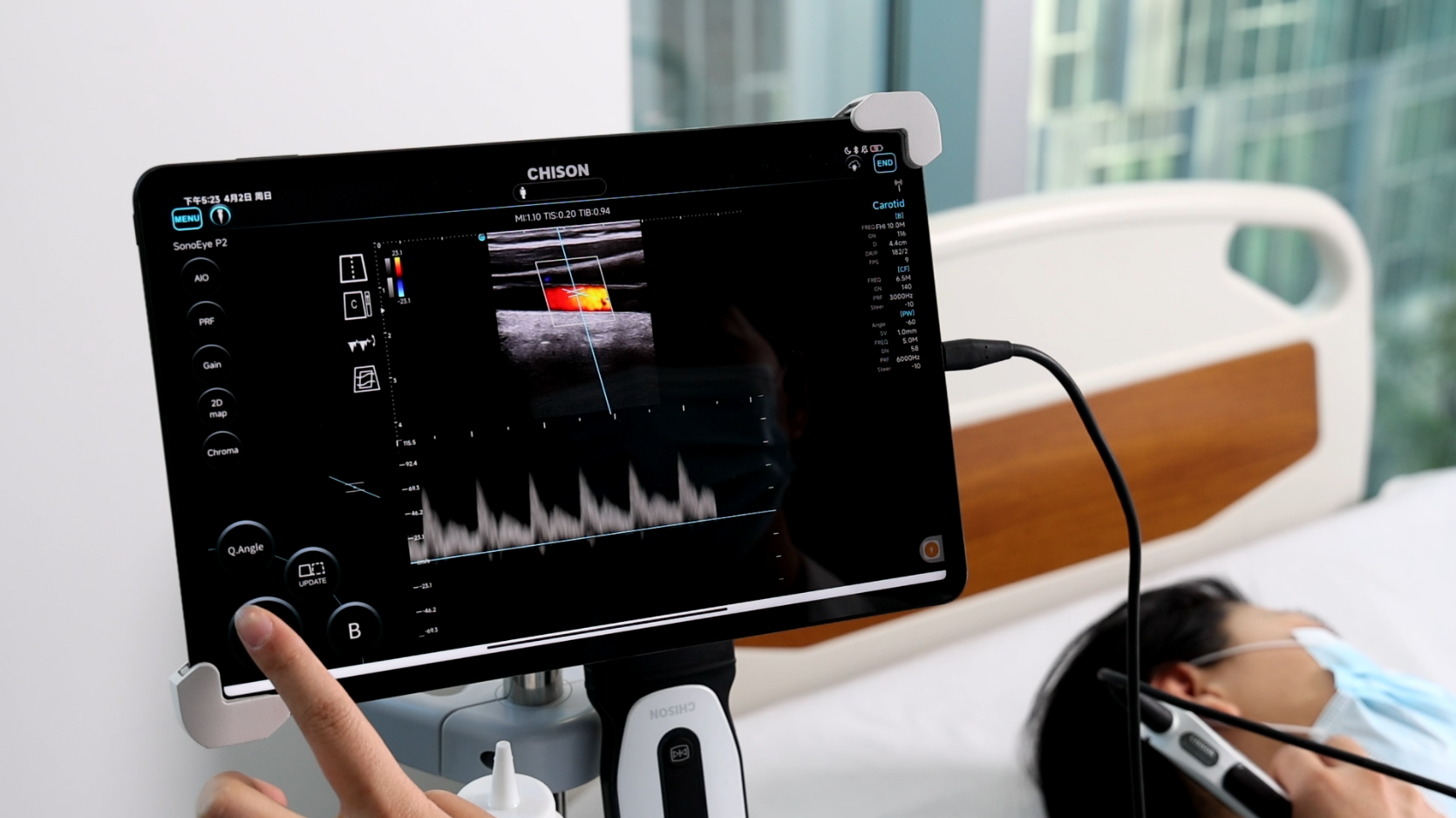
CHISON, a leader in the ultrasound industry with 28 years of experience, has consistently set benchmarks in medical imaging technology. With a comprehensive product line that caters to diverse medical needs, CHISON has established itself as a trusted name among healthcare professionals worldwide. The development of the SonoEye handheld ultrasound device is a testament to CHISON's commitment to innovation and excellence in ultrasound technology.
The motivation behind developing the SonoEye was to create a device that combines portability, ease of use, and high-quality imaging, specifically designed to meet the demands of Point-of-Care Ultrasound (POCUS). The design and development process involved extensive research and collaboration with medical professionals to ensure that the SonoEye addresses the practical challenges faced in various clinical settings.
The CHISON SonoEye stands out in the handheld ultrasound market due to its numerous strengths, which make it an ideal tool for healthcare professionals seeking reliable, high-performance imaging solutions.
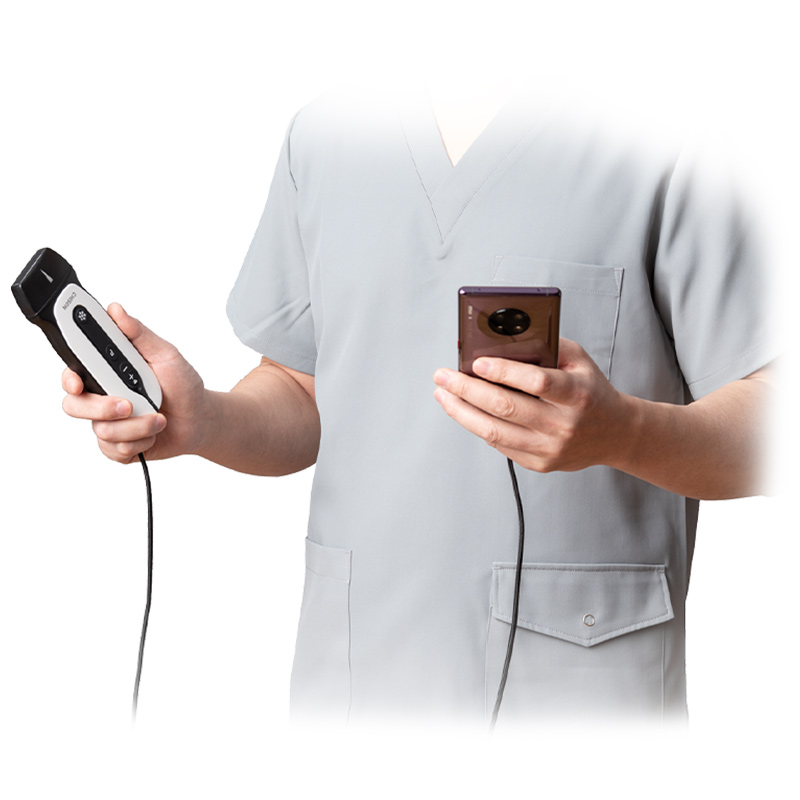
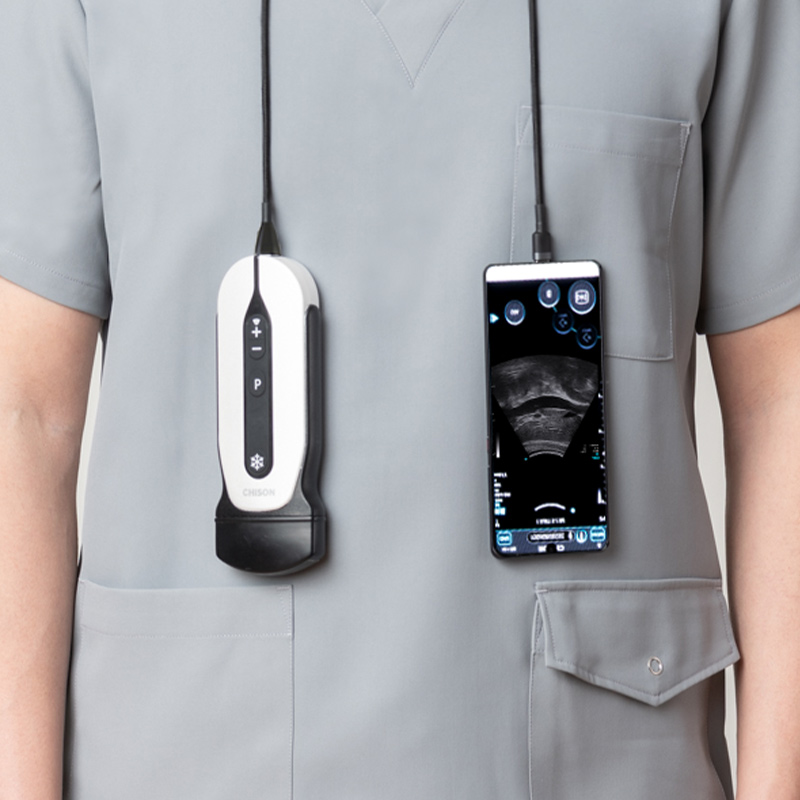
One of the most remarkable features of the SonoEye is its portability. Weighing less than a smart phone and small enough to fit in a pocket, the SonoEye is designed for maximum convenience. This lightweight and compact design makes it easy for clinicians to carry the device anywhere, enabling immediate point-of-care diagnostics whether in a hospital, clinic, or remote location.
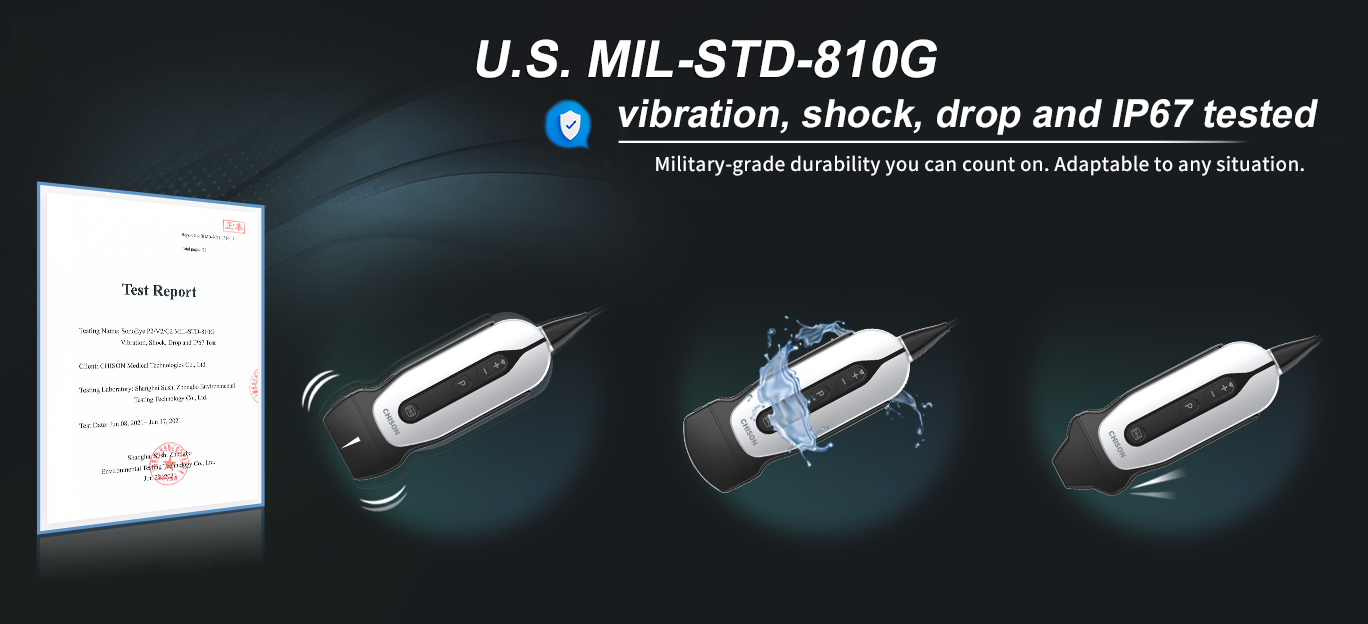
Durability is a critical factor for medical devices used in diverse and sometimes challenging environments. The SonoEye meets the rigorous IP67 standard, making it waterproof and dustproof. It can be submerged in water up to 1 meter deep for 30 minutes, allowing for thorough cleaning and disinfection.
Additionally, the SonoEye is compliant with U.S. MIL-STD-810G standards, which means it can withstand shocks, vibrations, and extreme temperatures. These features ensure that the device remains reliable and functional even in the harshest conditions. Furthermore, its lower power consumption extends battery life, making it ideal for long shifts and use in areas with limited access to power.
The SonoEye is designed with the user in mind, featuring a range of functionalities that simplify operation and enhance the user experience.
- Specialized Presets: The device comes with preset scanning modes tailored for different clinical applications, reducing the need for manual adjustments and speeding up the imaging process.
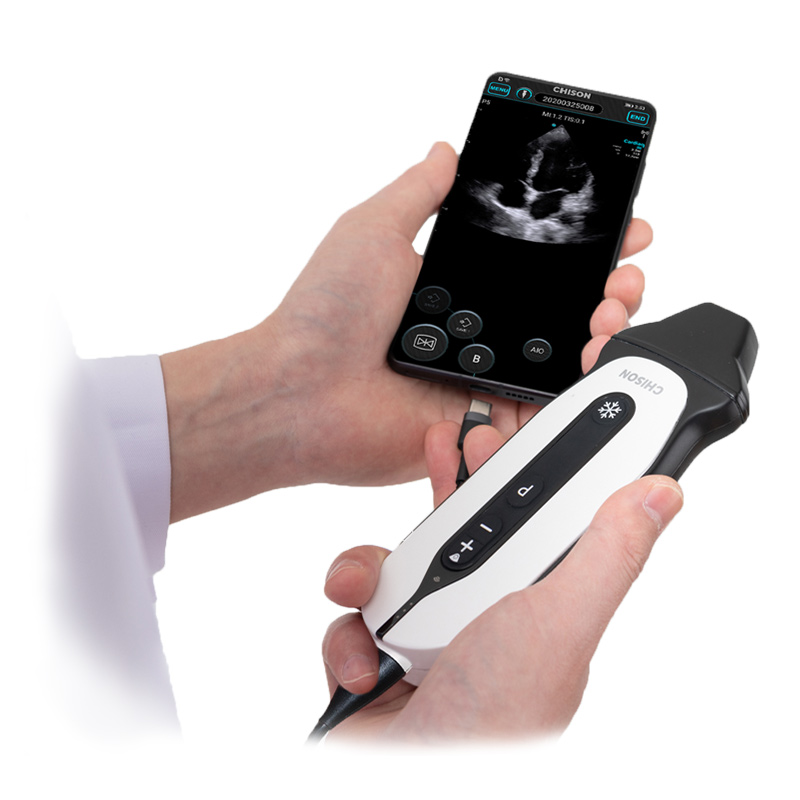
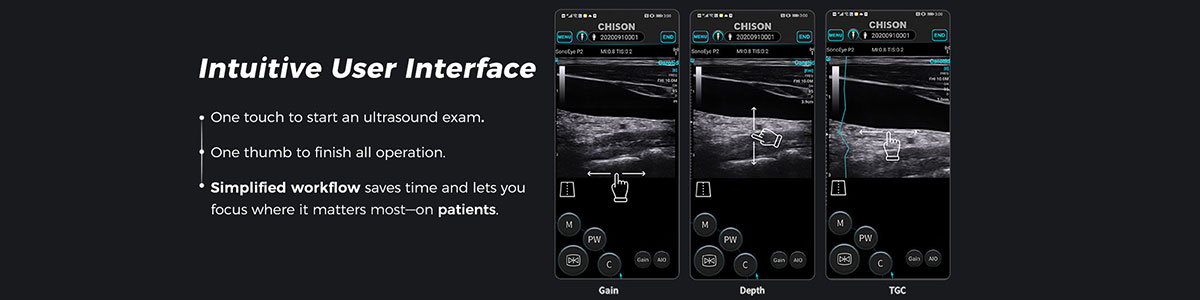
- Intuitive UI with Thumb Control: The user interface is designed for ease of navigation, allowing users to control the device with just their thumb. This ergonomic design minimizes hand fatigue and allows for quick and efficient operation. (Gesture Operated Patent)
- Remote Service Support: CHISON's dedicated service team offers remote support to assist with any technical issues, ensuring that the device remains operational and minimizing downtime.
- Customization: Users can customize the SonoEye to suit their specific needs, with options to set preferences for presets, button configurations, and programmable buttons.
- Efficiency: The SonoEye is engineered for fast response times and includes powerful functions(Including Intelligent Doppler, SonoZoom, SonoRemote, 2D steer, Trapezoid, SonoColor, CW, etc.) and quick measurement packages(Including Simpson(Trace), AV VTI-PW Mode, IVC-M Mode, HIP Graf. etc.) that streamline the diagnostic process, enhancing efficiency and reducing examination times.
The SonoEye is equipped with comprehensive software that enhances its functionality and adaptability across various medical fields. The software includes advanced imaging algorithms that improve image clarity and diagnostic accuracy. Additionally, the device supports a range of imaging modes, including B Mode, Color Doppler, PW Mode, M Mode, CPA Mode, DPD Mode, 2B Mode, providing clinicians with versatile diagnostic capabilities.
The software also facilitates seamless integration with electronic medical record (EMR) systems, enabling efficient data management and easy sharing of patient information. Cloud storage capabilities allow for secure and convenient access to patient records from any location, further enhancing the device’s utility in modern healthcare environments.
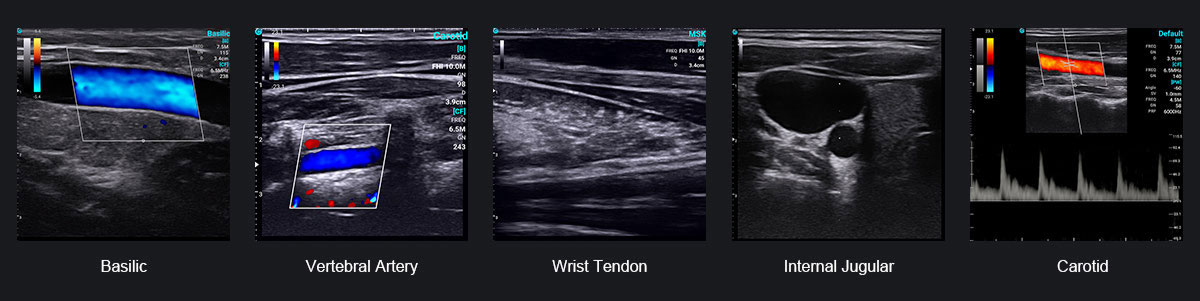
High-quality imaging is paramount in diagnostic ultrasound, and the SonoEye excels in this area. The device features advanced imaging technologies that produce clear, detailed images, enabling accurate diagnosis. The high-frequency transducers provide excellent resolution, allowing clinicians to visualize fine anatomical details and detect abnormalities with confidence.
Image Optimization features like AIO and Powerful Optimizing Parameters further enhance image quality by providing instant optimization and help you better adjusting your preferred scanning parameters. It not only improves diagnostic accuracy but also assists users in obtaining optimal images.
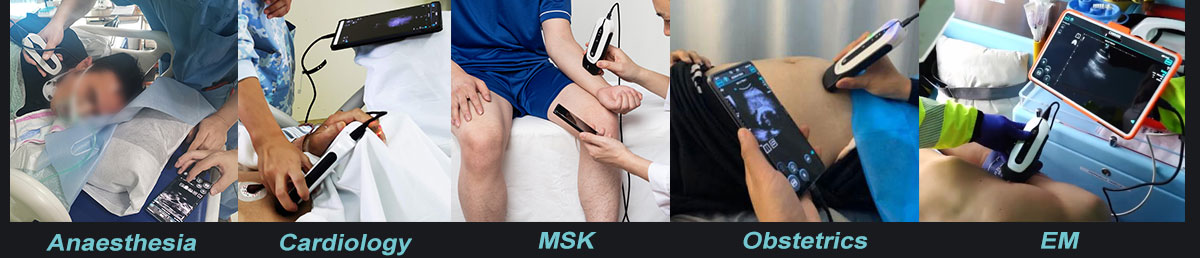
The versatility of the SonoEye makes it suitable for a wide range of clinical applications. It is used extensively in:
- Emergency Medicine: Quick and accurate imaging at the point of care is critical in emergency situations. The SonoEye enables rapid assessment of conditions such as internal bleeding, cardiac function, and traumatic injuries.
- Obstetrics and Gynecology: High-resolution imaging supports detailed fetal assessments and monitoring of pregnancy-related complications, making it an invaluable tool for obstetricians and gynecologists.
- Cardiology: The device is ideal for evaluating heart function, detecting pericardial effusions, and guiding procedures such as pericardiocentesis.
- Musculoskeletal Medicine: Detailed imaging of muscles, tendons, and joints supports the diagnosis and treatment of musculoskeletal conditions, making the SonoEye a valuable tool for sports medicine and orthopedic practices.
- More, like Primary Care: General practitioners benefit from the SonoEye’s ability to perform a wide range of diagnostic imaging, enhancing their capability to provide comprehensive care.
The CHISON SonoEye significantly enhances the effectiveness of POCUS by combining portability, durability, ease of use, and exceptional image quality. Feedback from healthcare professionals has been overwhelmingly positive, with many highlighting the device's ability to improve diagnostic accuracy, streamline workflows, and enhance patient care.
The future of POCUS looks promising with innovations like the SonoEye, which continue to push the boundaries of what is possible in handheld ultrasound technology. As more healthcare providers adopt this advanced tool, the potential for improving patient outcomes and transforming healthcare delivery becomes increasingly evident.
The Point-of-Care Ultrasound (POCUS) revolution is reshaping the landscape of medical diagnostics, and the CHISON SonoEye is at the forefront of this transformation. With its unmatched portability, durability, ease of use, comprehensive software, exceptional image quality, and wide range of applications, the SonoEye is poised to become an indispensable tool for healthcare professionals. By enhancing the capabilities of POCUS, the SonoEye not only improves diagnostic accuracy and efficiency but also contributes to better patient care and outcomes. As we look to the future, the innovations in handheld ultrasound technology promise to further elevate the standards of medical practice and patient care.